March 30, 2021 by Matthew Fraker
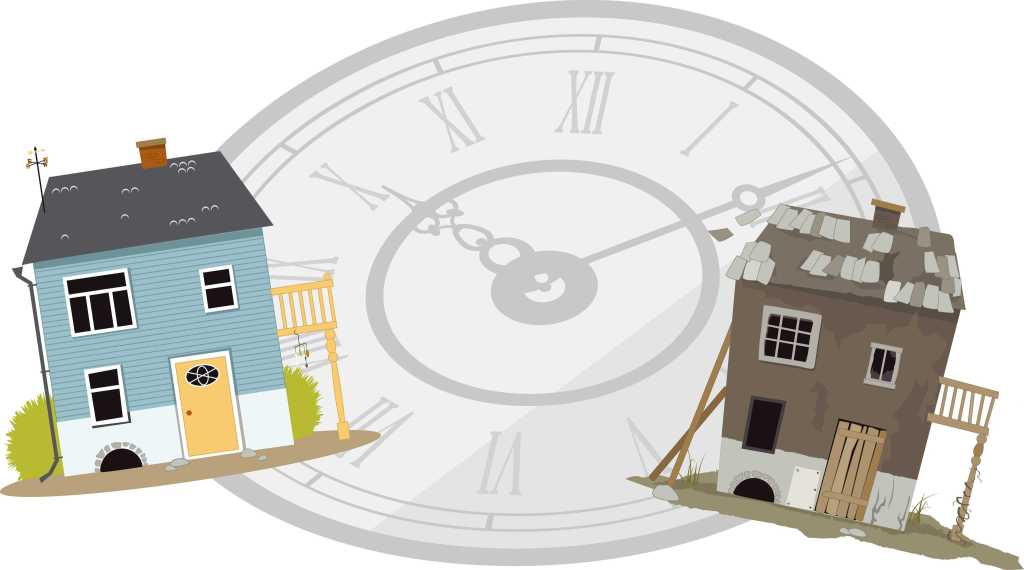
There are numerous causes of depreciation in real estate, and there are many different trains of thought regarding the topic. I am going to discuss three of the major categories in this post. When identifying causes of depreciation, I consider the land and structure to be two separate assets. As it turns out, the term real estate is defined as property consisting of both a structure and land. Real estate has a life cycle impacted by the flow of time, market trends, and surrounding development. Structures depreciate over time; however, the land a property rests on generally does not decline in value. The industry doesn’t depreciate land because of its everlasting useful life; however, there are a few minor exceptions where land may lose market value due to external factors (e.g., erosion or flooding), not to be confused with calculable depreciation. On the other hand, physical structures are affected by three forces: physical, functional, and economic obsolescence.
Physical obsolescence is the loss of value due to the deterioration of the structure itself, which is mainly due to lack of maintenance. Some examples of physical obsolescence include a leaky roof, wood rot, or a malfunctioning HVAC. Fortunately, many of these issues are mitigable if not altogether preventable. It’s good practice to exercise preventative maintenance when possible because it could save an owner money over the long term. For example, if a hardboard siding house needs to be repainted, delaying the job will likely result in swelling and rot, which will bring the added cost of replacing the siding.
Functional obsolescence occurs when a house no longer conforms to present-day buyers’ needs or wants. Function obsolescence is usually attributable to an outmoded design or feature, which ultimately results in a loss of value. It can be remediated in certain circumstances but is ordinarily very costly. An example of functional obsolescence is a house with old wiring, compartmentalized architecture, or tiny closets that seemed to be more appealing to buyers in the 20th century. That’s not to say that some people don’t prefer a compartmentalized house. I would argue that design trends are cyclical.
External or economic obsolescence occurs as a result of extraneous factors that ultimately impact value. If the city builds a highway or constructs a landfill next to a property, this would be considered external obsolescence, and as you can imagine, it’s usually incurable. But it’s not all bad. If an owner/investor had the capacity and resources to change the use of a given property, he/she might be able to add value.
We hope you find the information in this article helpful. We would love to hear what you think in the comment section below.
The content published in this post and other posts on this site are for informational purposes only and should not be interpreted as investment, tax, financial, or legal advice.
 Fraker Realty | Trusted Real Estate Services in Greater Charlotte