Wouldn’t it be nice if we could accurately predict the trajectory of the real estate market? Investment opportunities would be endless! We could rest easy knowing our money is safe and will generate the attractive returns commonly received through appreciation, cash flow, and tax benefits.
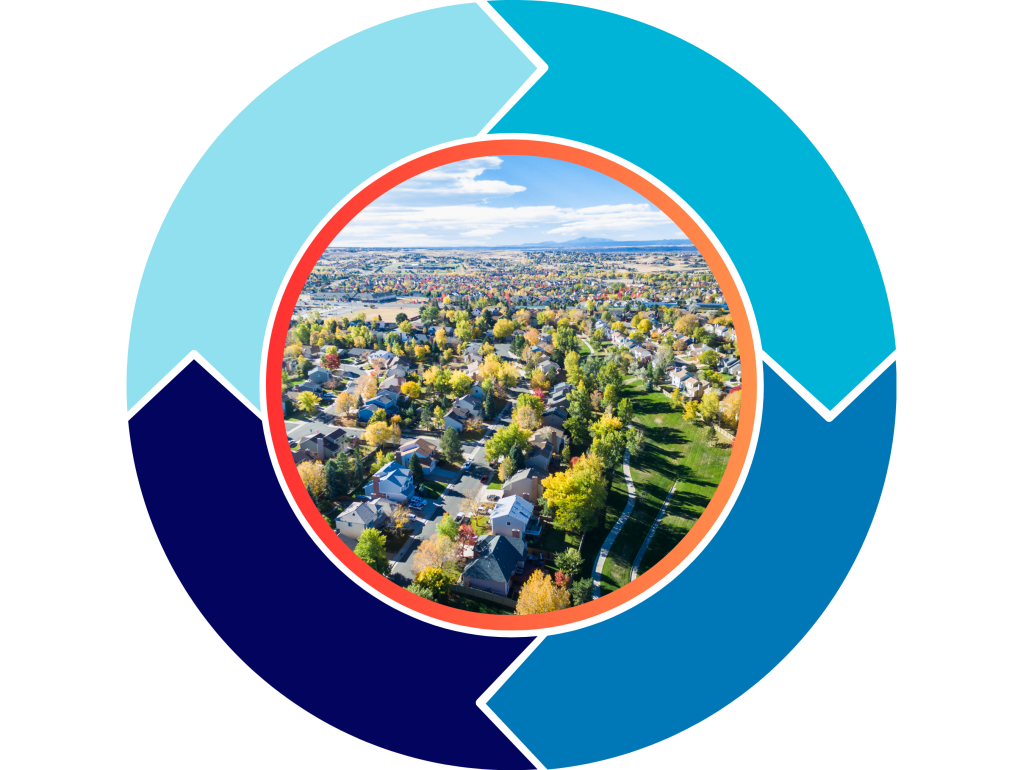
Nothing can be predicted with 100% certainty, but there are metrics we can use to make educated guesses. For example, market activity is localized, with appreciation in some areas and a slight depreciation in others. Demand in Charlotte is still strong, partially due to a lack of supply. Supply is down because homeowners are reluctant to sell. Homeowners are unwilling to sell for various reasons, mainly because most mortgages are locked in at a rate under 6%. According to Inman, almost 92% of mortgages are under 6%. Some homeowners also have negative equity due to aggressive bids during the pandemic, preventing them from selling. A hallmark of price decline is hyper-supply, and real estate has a notoriously high gestation period, so, in my humble opinion, it’s unlikely that we will see a massive decrease in prices this year in Charlotte. That is my prediction and may hold, but real estate is not a static environment — something may happen, causing prices to decrease substantially. We can’t definitively predict the market, but one of the best tools that can help guide an investor, especially when paired with other statistics, is patterns—specifically, the cyclical nature of the real estate market. This doesn’t just apply to investors; primary buyers can also benefit from this information. On a small scale, we have the neighborhood cycle, which starts with growth.
Growth: Growth is the first stage in the neighborhood cycle characterized by new housing and infrastructure development from infancy (newly built) through adolescence. If the area surrounding a neighborhood has abundant raw or undeveloped land, it’s common to see commercial growth and expansion. The properties in the community will likely experience appreciation as the area grows. It’s also common for home builders to increase the base cost of a house with every few builds, which also contributes to appreciation. The occupants are new, so there should be little turnover. Income levels of existing and new residents will likely be on the upswing. There should be little to no signs of physical or functional obsolescence. If you’re curious to learn about the different forms of real estate obsolesce, one of the driving forces of the neighborhood cycle, click here.
Stability/Maturity: Stability and Maturity mark the second stage of the neighborhood cycle and are characterized by balance. Those who purchased during the growth stage will likely still reside in their home; property for sale will appeal to primary owners over investors, primarily due to cost, as the property may still command a premium. Property values may still increase, but appreciation will slow. Income levels may continue to grow or will remain stable. Development may come to a halt as the supply of land decreases. Homes will typically not show heavy signs of physical obsolescence (wear and tear). Neighborhoods may stay in the stability stage for a very long time. This can result from many factors, such as the supply of homes relative to demand, the location of a neighborhood, the type and size of the home, and so on. Communities that remain in the stability/maturity phase may begin to experience functional obsolescence.
Decline: Decline is the third stage of the neighborhood cycle and is the easiest to identify. Primary owners make fewer repairs; consequently, homes will show clear signs of physical obsolescence. This will be easily identifiable by worn paint and rotted siding – an overall lack of maintenance. Typically, physical obsolescence can be remediated, although it can be cheaper if addressed through preventative maintenance and care — being proactive. Houses will likely also show signs of functional obsolescence. Functional obsolescence is much more difficult, if not impossible, to remediate without rebuilding or completely renovating and reorganizing the space. The houses begin to lose their market appeal, which grabs the attention of investors who quickly swoop in. Primary owner occupancy diminishes. In some cases, depending on the locale, a decline can continue until complete abandonment.
Rejuvenation: Rejuvenation marks the end of the current cycle and the beginning of a new one! Many houses have declined in value so much that, in some cases, the land is more valuable than the home. When this occurs, a developer will demolish the house and build a new one. In other cases, a home is renovated by either an investor or a primary owner. An older neighborhood containing dated estates may be a good candidate for renovation.
From an investment perspective, it’s essential to compare the cost of renovating to the market value once the renovation is complete. However, remember that renovation can only do so much to remediate functional obsolescence. You’ve likely seen this if you’ve walked through a renovated midcentury home. It’s not typical to find spacious walk-in closets or large master baths in the average 1950s home. I’ve seen investors sacrifice a portion of a neighboring room to create more space. That may or may not be a good choice depending on the number of rooms in the house. If I could offer advice regarding renovated properties, it would be this: do not be seduced by new flooring and repainted cabinets. Cosmetics alone are not enough to justify a massive price point, and you, the buyer, could be responsible for old wiring, piping, HVAC issues, and other latent defects. That’s not to say this happens with every house; many investors thoroughly renovate (if necessary). While functional renovations may raise expenses for the investor, they could also result in a higher profit margin. I would argue that it’s worth paying more for the home with cosmetic and functional renovations, especially if the buyer will run into fewer problems. That said, you should find an excellent real estate agent to represent you to ensure you don’t overpay, or in this market, overpay by too much as prices seem to eke higher with each new listing.
Remember, investing will always be risky, sometimes going differently than planned. However, making educated decisions should mitigate risk.
The content published in this post and other posts on this site are for informational purposes only and should not be interpreted as investment, tax, financial, or legal advice.
 Fraker Realty | Trusted Real Estate Services in Greater Charlotte